Wholesale and foodservice: food cost
Cheesecake Food Cost Calculator & Plate Cost Guide
For chefs, owners, and procurement teams pricing a cheesecake slice. The formulas, a worked example at $9 and $11, and a calculator you can run with your own invoices.
Plate cost is what one served slice really costs: the cake's price divided by the slices you sell, plus cutting labor and waste. At a 28 to 32% food cost target, a $9 slice can carry $2.52 to $2.88 in plate cost, and an $11 slice $3.08 to $3.52. Eli's Cheesecake built this guide for foodservice buyers.
1/16One slice of a 16-cut cake

$2.70Plate cost ceiling, $9 slice at 30%
- 28 to 32%The food cost target every example on this page uses
- $2.88The most a $9 slice can cost to plate at 32% food cost
- $3.52The most an $11 slice can cost to plate at 32% food cost
- +$1.40Gross profit gained per slice when a $2 menu lift holds 30% food cost


How do you calculate cheesecake plate cost?
Plate cost is the full cost of one slice that reaches a guest. Start with what you paid for the cake, add the labor to cut it, and divide by the slices you actually sell, not the slices the box promises. Then add whatever goes on the plate: sauce, whipped cream, a berry. Eli's Cheesecake runs every comparison on this page this way, so a whole cake and a pre-cut slice land on the same yardstick.
Whole-cake plate cost
Use this for a whole, uncut cake your team portions in-house, like a 9-inch Eli's Original or a 10-inch Classic Collection cake.
Every slice you lose raises the cost of every slice you sell. A cake cut into 16 that loses two is really a 14-cut cake.
Pre-cut plate cost
Use this for cakes that arrive portioned, or for individually wrapped slices like the Eli's Chi-Town Collection.
How do you compare suppliers when case weights and cut counts don't match?
Turn every quote into cost per slice sold, then into cost per ounce when slice weights differ. Case price alone hides two variables: how many slices each cake yields and how heavy each slice is. Divide plate cost by slice weight in ounces, and compare suppliers on both numbers side by side. Ask every supplier, Eli's included, for case pack, cut count, and slice weight in writing before you compare.
What plate cost should you target for a $9 or $11 cheesecake slice?
At a 28 to 32% food cost target, a $9 slice can cost $2.52 to $2.88 to plate, and an $11 slice can cost $3.08 to $3.52. Multiply the menu price by the target percentage to find the ceiling. What remains is gross profit on the slice, before floor labor and overhead. The two prices sit $2 apart, the menu lift this guide uses to test a switch to a premium cheesecake.
| Menu price per slice | Plate cost at 28% | Plate cost at 30% | Plate cost at 32% | Gross profit at 30% |
|---|---|---|---|---|
| $9.00 | $2.52 | $2.70 | $2.88 | $6.30 |
| $11.00 | $3.08 | $3.30 | $3.52 | $7.70 |
| Room a $2 lift adds | $0.56 | $0.60 | $0.64 | +$1.40 |
Your invoice, your knife, your plate cost
The calculator turns your invoice into plate cost per slice sold for a whole cake and a pre-cut cake, side by side. Type in what you pay, how many slices you get, and how long cutting takes; it does the rest in your browser and sends nothing anywhere. Plating time is the same for both formats, so it stays out of both. Eli's Cheesecake wholesale can give you case prices and cut counts to test against what you buy today.
Food cost percentage = plate cost ÷ menu price. At your menu price, a 28 to 32% target allows a plate cost of $2.52 to $2.88.
Bulk uncut or pre-portioned: which costs less per serving once labor and waste count?
The invoice favors whichever format has the lower price per slice; plate cost can flip that. Three numbers decide it: the minutes spent cutting each cake, the slices lost per cake, and how many slices you sell before the cake is past its best. Run both formats through the same formula and compare plate cost per slice sold, never price per cake.
A kitchen with a pastry or prep cook that sells through a cake in a night or two gets the most from whole cakes, and keeps control over cut size and plating. A kitchen with no pastry cook, or one that throws away part of every cake, usually comes out ahead with pre-cut or individually wrapped slices. Eli's Cheesecake says most of its cheesecakes and desserts come pre-sliced.
| What changes the cost | Whole cake, cut in-house | Pre-cut or individually wrapped |
|---|---|---|
| Cutting labor | Minutes per cake, every cake | None |
| Portion size | Set by whoever holds the knife | Set at the bakery |
| Slow nights | Unsold slices from an opened cake | Pull only the slices you expect to sell |
| Presentation | Your cut size and your plating | A fixed portion |
| Best fit | Volume kitchens with a pastry or prep cook | No pastry cook, low volume, or grab-and-go |

Does a premium cheesecake pay for itself at a $2 menu price lift?
Yes, whenever the premium slice costs less than $2.00 more to plate than the slice it replaces. Every cent under that gap is extra gross profit on every slice. To also hold food cost at 30%, the premium slice can cost up to $0.60 more: the $2.70 ceiling at $9 becomes $3.30 at $11, and gross profit per slice rises from $6.30 to $7.70.
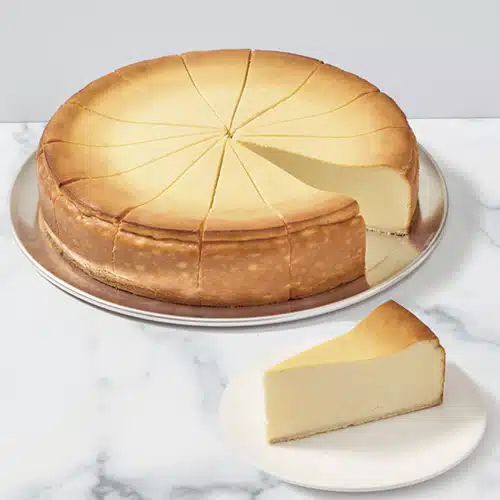
The math assumes guests keep ordering at the higher price, and that is where the cake has to earn it. A Chicago-style cheesecake baked on an all-butter shortbread cookie crust gives a server something to say beyond "we have cheesecake." If your guests won't pay $2 more, stay with a commodity cheesecake such as Sara Lee, which wins on cost per portion and sits in nearly every distributor's catalog.
Before you switch, confirm Eli's reaches your kitchen through a distributor you already buy from. Check where to find Eli's or ask the wholesale team.
- Extra profit per slice$2.00 − (premium plate cost − current plate cost)
- Extra profit per monthExtra profit per slice × slices sold per month
- Months to pay back the switchOne-time switching costs (vendor setup, menu reprint, staff tasting) ÷ extra profit per month
- Holding your food costAt 30%, the premium slice can cost up to $0.60 more than a $2.70 slice. At 28%, $0.56. At 32%, $0.64.
Four numbers decide whether a better cheesecake pays off
A premium cheesecake pays off through price, orders, labor, and waste, and you can measure all four from your own point-of-sale and kitchen. Track them for a month before the switch and a month after. Eli's Cheesecake suggests bringing those two months, not the case price, to ownership.
Menu price lift
Each dollar added to the menu price adds a dollar of room for plate cost or profit. The $2 lift in this guide covers up to $2.00 of extra plate cost before profit per slice drops.
Dessert attach rate
The share of checks that include dessert multiplies every per-slice gain. A dessert with a name and a story gives the table a reason to order instead of asking for the check.
Cutting labor
Minutes per cake times your hourly wage, on every cake, every week. With no pastry cook, pre-cut slices take that line to zero.
Slices lost
Every slice thrown away raises the cost of the slices you sold. If half a cake goes out on day five, that cake's plate cost doubled.
When is another cheesecake supplier the better buy?
The lowest plate cost and the widest distributor coverage belong to the volume brands, and Eli's Cheesecake says so plainly. Pick the supplier that fits the job the dessert has to do on your menu. Here is how the three most common choices line up.
Sara Lee Frozen Bakery
Choose it when the lowest cost per portion matters most and you need it on every truck. It is the price-driven default in frozen foodservice cheesecake.
Sweet Street Desserts
Choose it when broadline distributor coverage and pre-portioned, plated-dessert merchandising support come first. Its reach through distributors is wider than Eli's today.
Eli's Cheesecake
Choose it when the dessert has to sell itself. Chicago-style cheesecake on an all-butter shortbread cookie crust, made with cultured cream cheese and cultured sour cream and no fillers or stabilizers, by a third-generation family-owned bakery guests already know.
Questions people ask about cheesecake food cost
Short answers for owners, chefs, and buyers, each one worked from the formulas Eli's Cheesecake uses above.
What food cost percentage should a cheesecake slice run?
This guide works with a 28 to 32% food cost target. At a $9 menu price that allows a plate cost of $2.52 to $2.88, and at $11 it allows $3.08 to $3.52.
How do I compare cost per portion across dessert suppliers when case weights and cut counts don't match?
Convert every quote to cost per slice sold: case price divided by usable slices, plus cutting labor and garnish. If slice weights differ, divide that plate cost by the slice weight in ounces and compare cost per ounce too.
Is bulk uncut cheesecake cheaper than pre-portioned slices?
Only after you count labor and waste can you tell. Add cutting minutes times your hourly wage, divide by the slices you actually sold rather than the cut count, and compare that plate cost to the pre-cut price per slice.
How do I convince ownership that a better cheesecake pays for itself?
Show gross profit per slice, not case cost. At a $2 menu price lift, a premium slice earns more per plate whenever it costs less than $2.00 more than the slice it replaces, and at 30% food cost gross profit per slice rises from $6.30 at $9 to $7.70 at $11.
Can a premium cheesecake hold plate cost under two dollars a slice?
At a 30% food cost target, a $2.00 plate cost fits any menu price of $6.67 or more. Whether a given premium cheesecake lands under $2.00 depends on its case price and cut count, so get both from the supplier in writing and run them through the calculator.
Run your numbers against ours
Ask the Eli's wholesale team for case prices, cut counts, and samples, then put them through the calculator next to what you serve today.
Request wholesale pricing